
Bringing someone home from the hospital sounds like the finish line—but if you’re doing this in Warrenton or Manassas, you already know it can feel like the start of a whole new job. If you’re overwhelmed (and a little scared you’ll miss something), you’re not alone.
Why these first two weeks feel so intense
This is the window where everything is changing at once—new meds, lower energy, weaker legs, weird sleep, and a house that suddenly has trip hazards everywhere. And while the hospital team may have explained a lot, it’s different when it’s 10 p.m. at home and you’re trying to remember, “Was this pill morning or night?” while your loved one just wants to lie down.
A lot of the “problems” that send people right back to the ER aren’t dramatic medical events—they’re everyday things stacking up. Missed meals. Missed follow-ups. A slippery shower. One dizzy moment getting to the bathroom.
The tricky part: hospital instructions don’t cover real life
Discharge papers are great for listing meds and follow-ups. They’re not great at explaining how you’re supposed to help someone shower when they can’t stand safely, or what to do when they’re too wiped out to eat, or how you’re going to get them to multiple appointments in one week while you’re still working and parenting.
That “in-between” is where families in Fauquier County and Prince William County get stretched thin fast. It’s not that you don’t care—it’s that you can’t be in five places at once.
Hands-on help that actually makes the days easier
Most of the support in the first 14 days isn’t fancy. It’s practical, steady help with the basics—so your loved one stays safe and you can breathe a little.
Help with bathing and getting dressed
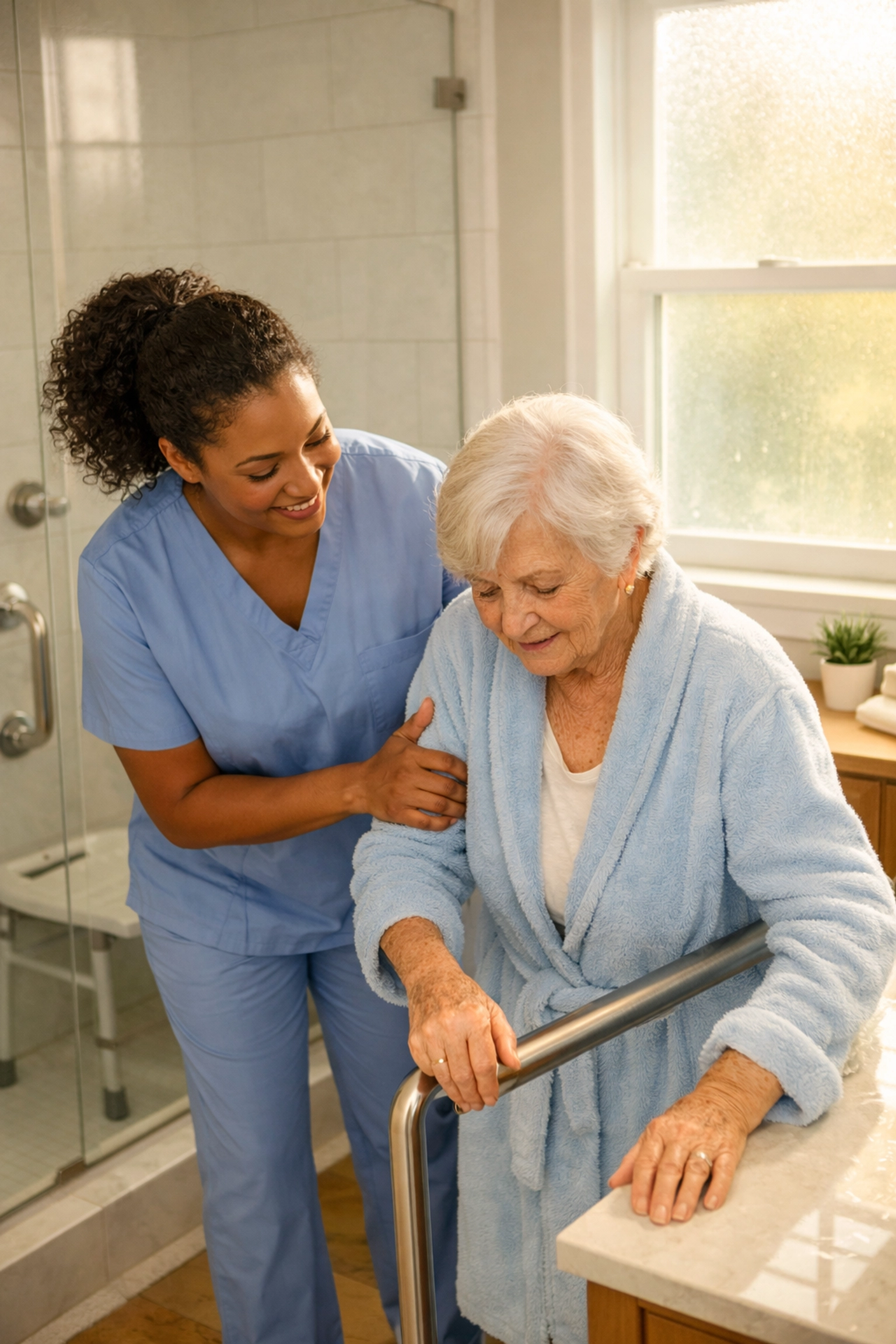
Showers are one of the first places families realize, “Okay…this is harder than we thought.” A caregiver can help with safe bathing, grooming, clean clothes, and that awkward “getting in and out” part—without rushing or embarrassing your loved one.
Help with meals and keeping up strength
When someone comes home tired, sore, or nauseated from meds, cooking is usually the last thing they want to do. Having someone plan simple meals, cook, and keep an eye on hydration can make a huge difference—because it’s hard to heal when you’re running on coffee and crackers.

Help moving around the house safely
The walk from the bed to the bathroom can feel like a marathon after a hospital stay. A caregiver can assist with steadying, transfers, and “slow-down” reminders—plus small safety habits like clearing clutter and keeping pathways open.
And if you can’t be there every moment, it helps to know someone responsible is.
Let’s talk about medications
This is the part that trips up even the most organized families. Your loved one comes home (maybe from Fauquier Hospital) with a stack of bottles—some new, some changed, some “stop taking this one,” and you’re supposed to remember it all while also getting them settled, fed, and comfortable.
What helps most is a simple routine. A weekly pill organizer, a written schedule on the counter, and someone who can give consistent medication reminders so doses don’t get skipped or doubled. It’s not “medical care”—it’s the day-to-day follow-through that supports what the doctor already ordered.

Getting to doctor appointments without the meltdown
Those follow-ups come fast—primary care, surgeon, cardiology, therapy—and they matter. But in real life, getting out the door can be the hardest part: helping them wash up, get dressed, move safely to the car, and then walk into the office without getting exhausted or unsteady.
In Warrenton and Manassas, I hear this all the time: “We meant to go…we just couldn’t make it happen.” Having reliable transportation and a steady helping hand means those appointments actually happen—and concerns get caught early instead of turning into another emergency.
What this support looks like around Warrenton and Manassas
In the first two weeks, “help” usually looks simple—and that’s the point. It’s someone showing up consistently to help your mom shower safely after surgery, get a real meal on the table, and make sure she’s steady getting from the bed to the chair.
It’s also the in-between moments families don’t always plan for—getting dressed for an appointment, keeping a calm routine when your loved one is frustrated, and making sure the day doesn’t turn into a scramble. In Prince William County especially, a lot of families are juggling work and caregiving, and weekday coverage can be the difference between “we’re managing” and “we’re drowning.”

What you can control (even when everything feels unpredictable)
You can’t control every twist in recovery. But you can control the basics that keep things from spiraling—safe bathing, steady meals, medication reminders, and making it to follow-ups.
You can also make sure someone is paying attention day to day. When a caregiver is there consistently, they notice the small changes—less appetite, more confusion, unusual fatigue—and they can tell you early so you can respond calmly instead of in a crisis.
Getting support quickly (because discharge timing is never convenient)
Hospital discharges have a way of happening at the worst time—late afternoon, heading into a weekend, right when you’re trying to rearrange your whole life. If you’re in Fauquier County or Prince William County and you need non-medical home care fast, that’s exactly the kind of moment we’re built for at Angelcares Homehealth LLC.
We can help with the hands-on stuff that makes home feel doable again—bathing and personal care, meal prep, safe mobility support, medication reminders, respite for family caregivers, and transportation to appointments.
If you’re feeling overwhelmed, that’s a sign to reach out
Getting help isn’t “giving up.” It’s protecting your loved one—and protecting you—during a really demanding stretch. If your family is bringing someone home to Warrenton, Manassas, or anywhere nearby in Fauquier or Prince William, we’re here to help you put a steady routine in place.
Visit angelcares.com to learn more or contact us to talk through what the next two weeks could look like with support.


